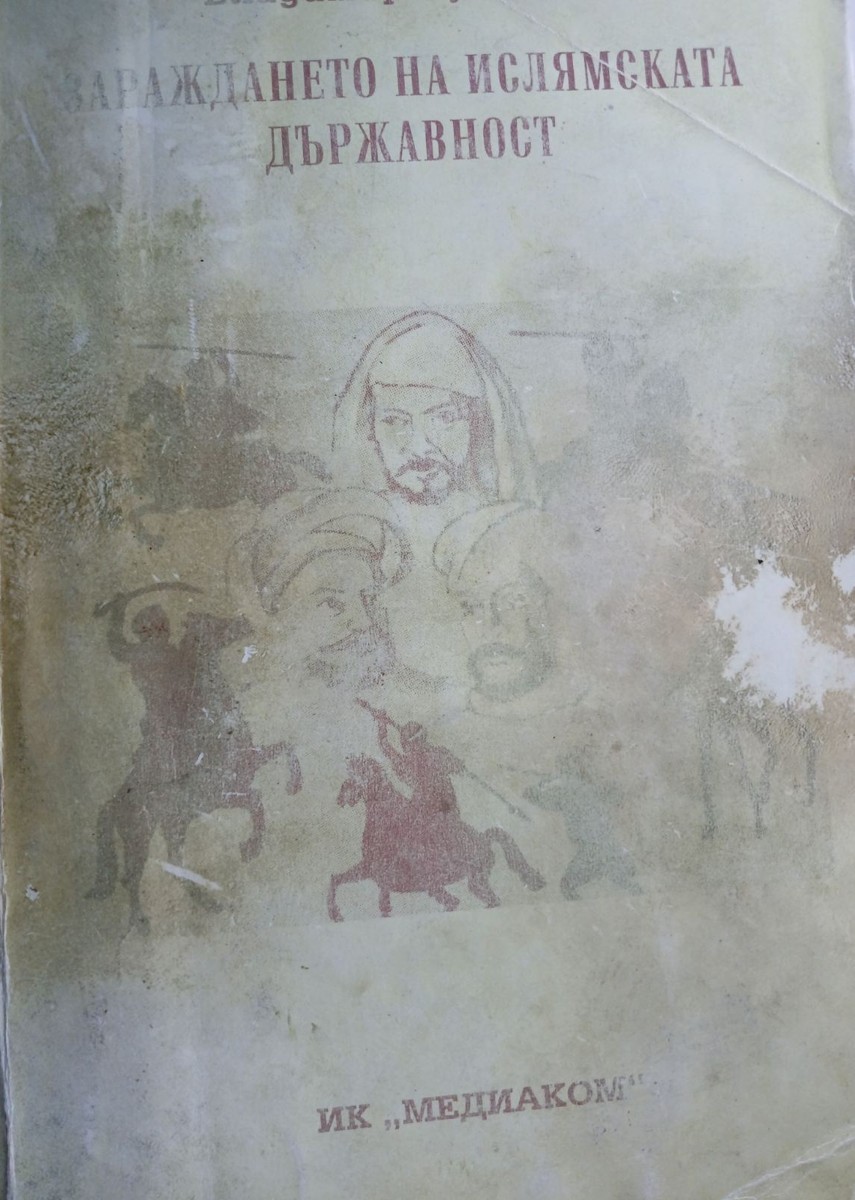
The Emergence of Islamic Statehood
The monograph The Emergence of Islamic Statehood is a comprehensive historical and institutional study dedicated to the origin, evolution, and structural consolidation of the Islamic state—from the pre-Islamic era on the Arabian Peninsula to the decline of the medieval Middle Eastern caliphates and the establishment of Ottoman rule. At the core of the work lies an analysis of the unique transition from a tribal-clan organization to a complex theocratic and administrative empire in which religious doctrine and political authority are inextricably linked.
The narrative begins with a reconstruction of the socio-economic, political, and religious landscape of Arabia in the 6th and 7th centuries. Particular attention is devoted to the city of Mecca as a key commercial hub and pre-Islamic cult center. The study traces the early life of the Prophet Muhammad and the onset of his preaching, which led to profound spiritual and social transformations. The turning point in the research is the migration to Yathrib (Medina), where, alongside the formation of Islamic dogmatics and rituals, the foundations of the first Muslim community (Ummah) were laid and the earliest signs of Islamic statehood emerged. The politico-military expeditions (al-Ghazawat), the unification of the Arab tribes, and the overcoming of the crisis following the Prophet’s death delineate the framework within which the Caliphate arose.
A substantial portion of the monograph traces the political history of the Islamic world through the prism of its leading dynasties. It examines in detail the era of the four Rightly Guided Caliphs (632–661)—a period marked by large-scale territorial expansion against Sasanian Iran and Byzantium, yet also by acute internal upheavals. The subsequent analysis covers the rise and fall of the Umayyad Caliphate in Damascus (661–750) and the ascent of the Abbasids (750–1258). The Abbasid era is explored through its distinct historical phases—from its "Golden Age" and complex diplomatic and military relations with Byzantium to the gradual weakening of central authority and the dominance of the Turkic guards, the Buyids, and the Seljuks.
Alongside the centrifugal processes within the Abbasid Caliphate, the work examines the emergence of independent and rival Islamic polities. Special focus is placed on the Shia Fatimid Caliphate in North Africa and Egypt, the political and cultural development of the Islamic Maghreb and Al-Andalus, as well as the clash between Islam and the Christian world during the Crusades under Ayyubid rule. The historical overview concludes with the Mamluk era and the transition of the Islamic East under Ottoman rule in the early 16th century.
The final part of the monograph offers an in-depth structural cross-section of the Islamic state apparatus. It explores the essence of political Islam, central and local administration, the judiciary, security organs, and the organization of the military. The analysis of fiscal and tax policy, economic life, and the social stratification of Arab-Muslim society is complemented by a survey of the major achievements in science, spirituality, and Islamic art. Equipped with an extensive reference apparatus, chronology, and genealogical tables, the book serves as a valuable guide to understanding the historical roots and institutional logic of Islamic civilization.
| Publisher | Mediakom Publishing House, Sofia |
|---|---|
| Original language | Bulgarian |
Contents
Preface
Chapter I. Arabia on the Eve of Islam and the Early Life of the Prophet Muhammad
- § 1. Mecca in the 6th–7th Centuries
- § 2. Mecca as a Cult Center
- § 3. Information on the Prophet Muhammad Before Islam
- § 4. The Beginning of Religious Preaching
Chapter II. The Prophet Muhammad in Yathrib (Medina) and the Foundations of the Islamic Community
- § 5. The Prophet Muhammad in Yathrib
- § 6. The Formation of Islamic Dogmatics and Rituals
- § 7. The Prophet's Campaigns (al-Ghazawat) for the Spread of the Divine Message Among the Tribes of Hijaz, Najd, and the Coast of the Arabian Peninsula
- § 8. The First Signs of Islamic Statehood
- § 9. The Prophet's Final Campaigns
- § 10. The Uprisings of the False Prophets
- § 11. The Death of the Prophet
Chapter III. The Era of the Rightly Guided Caliphs (632–661)
- § 12. The Successor of the Prophet
- § 13. Abu Bakr's First Steps as Caliph (632–634)
- § 14. The Establishment of the Dynasty of the Rightly Guided Caliphs – the First Islamic Dynasty (632–661)
- § 15. The First Clashes with Sasanian Iran
- § 16. The Territorial Expansion of the Caliphate under the Second Rightly Guided Caliph Umar ibn al-Khattab (634–644)
- § 17. Uthman ibn Affan (644–656) and Ali ibn Abi Talib (656–661)
- § 18. A Time of Internal Unrest and the End of the Dynasty of the Rightly Guided Caliphs
Chapter IV. The Umayyad and Abbasid Caliphates
- § 19. The Umayyad Dynasty (661–750)
- § 20. Abbasid Propaganda and the Fall of the Umayyad Dynasty
- § 21. The Abbasid Dynasty (750–1258)
- § 22. Relations Between the Abbasids and Byzantium
- § 23. The Second Abbasid Period – the Turkic (847–936)
- § 24. The Third Abbasid Period – the Buyid (946–1055)
- § 25. The Fourth Abbasid Period – the Seljuk (1055–1195)
Chapter V. The Decentralization of the Caliphate and New Islamic Polities
- § 26. Islamic Polities Independent of the Abbasid Caliphate
- § 27. The Fatimid Caliphate (909–1171)
- § 28. The Islamic Maghreb and Andalusia
- § 29. The Struggle Between Christianity and Islam During the Crusades – the Ayyubid Period (1093–1250)
- § 30. The Mamluk Era (1250–1516) and the Fall of the Islamic East under Ottoman Rule
Chapter VI. The State Structure, Economy, and Culture of the Islamic World
- § 31. Political Islam and Its Institutions
- § 32. Local and Departmental Islamic Administration
- § 33. Islamic Justice and Security Bodies
- § 34. The Organization of the Islamic Army
- § 35. Finance and Tax Policy
- § 36. Economic Life in the Islamic State
- § 37. Arab-Muslim Society
- § 38. Science and Spirituality
- § 39. Islamic Art
Appendices and Reference Apparatus
- Bibliography
- Indexes
- Appendix 1: Key Events in the Islamic World (Chronology)
- Appendix 2: Genealogies