Foreign Policy and Ideas
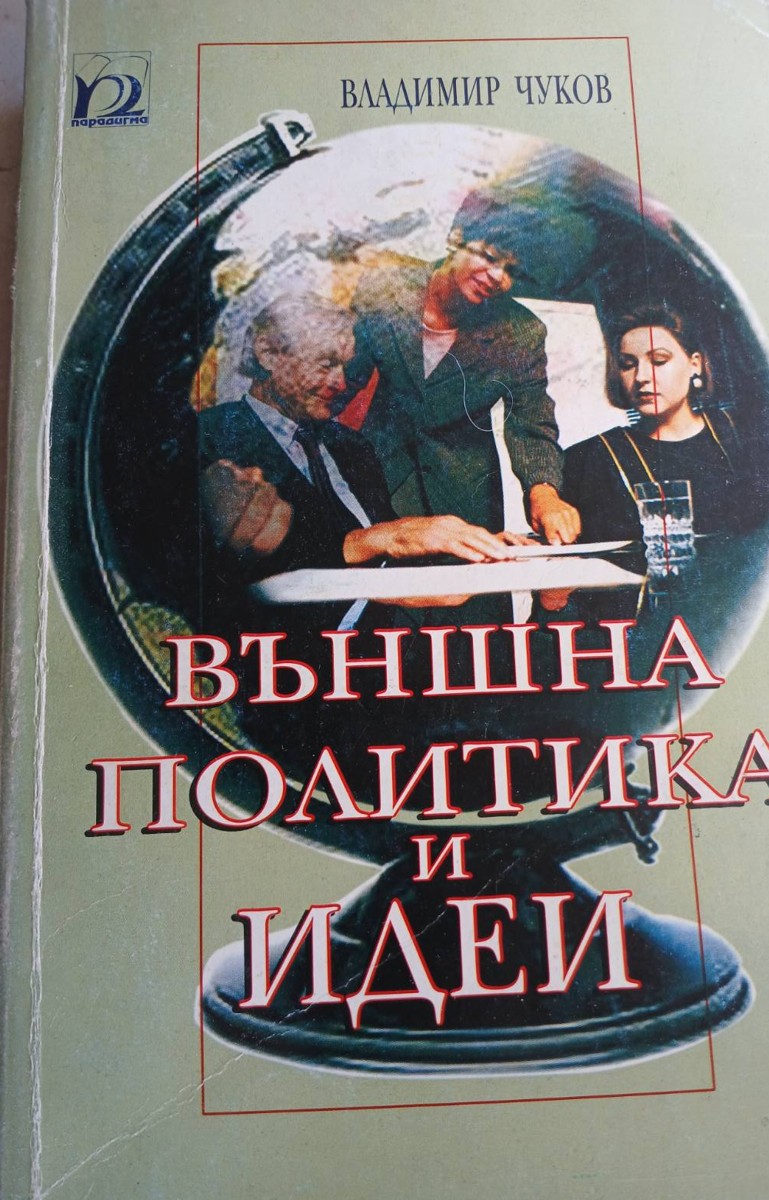
This scientific analysis, entitled “Foreign Policy and Ideas”, represents a systematic, theoretical-methodological, and applied study of the nature, driving forces, decision-making mechanisms, and instruments of contemporary foreign policy. The study examines foreign policy activity not merely as a collection of reactive state moves, but as a complex, multi-layered process in which material interests and institutional frameworks intertwine with ideas, values, historical attitudes, and strategic vision.
In the Introduction, the author outlines the relevance of the topic in a dynamically changing international environment, defines the subject matter and methodological boundaries of the research, and substantiates the key role of the ideational factor in shaping the foreign policy behaviour of states.
Chapter One (“Genesis of Foreign Policy”) lays the fundamental theoretical foundations of the study. Foreign policy is analysed as an integral part of the broader political process, presenting the leading research schools and paradigms in its study. Special attention is devoted to the objective and subjective sources of foreign policy, as well as to the two-way nexus between foreign and domestic policy. The author examines the range of state and non-state actors involved in its formulation, the significance of public consensus for the sustainability of a country’s international standing, and the hierarchy of foreign policy objectives.
Chapter Two (“Comparative Foreign Policy”) offers an in-depth conceptual and comparative analysis of the core categories in the international sphere. A clear dividing line is drawn between the concepts of foreign policy, international politics, and international relations. Central to this section is the examination of the interrelationship between pragmatic categories (national interests and security) and normative-value orientations (ideal and honour). The chapter explores the dynamics between the foreign policy process and political course, the correlation between strategy and tactics, the anatomy of foreign policy action, and differentiation in international approaches. Particular emphasis is placed on rationality in foreign policy, the tension between principledness and flexibility, as well as the influence of behavioral stereotypes, the political elite, and the religious factor on state behaviour.
Chapter Three (“Foreign Policy Decision-Making”) shifts the focus to the internal laboratory of state governance and the process of formulating policy choices. It analyzes in detail the specifics and classification of foreign policy decisions, the stages of identifying a problem situation, methods of situational analysis, and the importance of scientific forecasting. The chapter presents the main theoretical models of foreign policy action and the decisive role of information under conditions of uncertainty. It outlines the general characteristics of the foreign policy mechanism and concludes with a specific institutional analysis of the functions and powers of the main foreign policy institutions in the Republic of Bulgaria.
Chapter Four (“Diplomacy”) is dedicated to the primary peaceful instrument for implementing foreign policy. It traces the historical emergence and general characteristics of diplomatic activity, as well as the essence of diplomatic action. The author examines various forms of contemporary diplomatic practice—ranging from the role of high-level personal diplomatic contacts to multilateral conference diplomacy. The chapter also explores the relationship between diplomacy and science, both in terms of the scholarly grounding of the diplomatic profession and the contemporary interaction between the scientific community and international relations.
The Conclusion summarizes the main theoretical and practical findings of the monograph. It emphasizes that a successful and predictable foreign policy requires a harmonious combination of a realistic assessment of national interests, institutional efficiency, professional diplomacy, and a clear ideational vision. The reference apparatus of the book includes an extensive bibliography, an index of names and a subject index, as well as the text of the Vienna Convention on Diplomatic Relations as a foundational international legal instrument in this field.
| Publisher | Paradigma |
|---|---|
| Original language | Bulgarian |
Contents
Introduction
Chapter One. Genesis of Foreign Policy
- Foreign Policy as Part of Politics
- Research Schools (Schools of Thought)
- Sources of Foreign Policy
- The Foreign–Domestic Policy Nexus (Foreign–Domestic Policy Relations)
- Actors in Foreign Policy (Subjects of Foreign Policy)
- Public Consensus
- Foreign Policy Objectives
Chapter Two. Comparative Foreign Policy
- Foreign Policy, International Politics, and International Relations
- Foreign Policy, National Interests, Security, Ideal, and Honor
- Process and Course
- Strategy and Tactics
- Foreign Policy Action
- Differentiation
- Rationality of Foreign Policy
- Values and Priorities
- Principledness and Flexibility
- Behavioural Stereotypes
- Elite
- Religion
Chapter Three. Foreign Policy Decision-Making
- Foreign Policy Decision: Specifics and Classification
- Problem Situation and Situational Analysis
- Forecasting
- Decision-Making
- Models of Foreign Policy Action
- Information: General Characteristics
- General Characteristics of the Foreign Policy Mechanism
- Functions of the Main Foreign Policy Institutions in Bulgaria
Chapter Four. Diplomacy
- Diplomacy: Emergence and General Characteristics
- Diplomatic Action
- Personal Diplomatic Contacts
- Conference Diplomacy
- Science Diplomacy