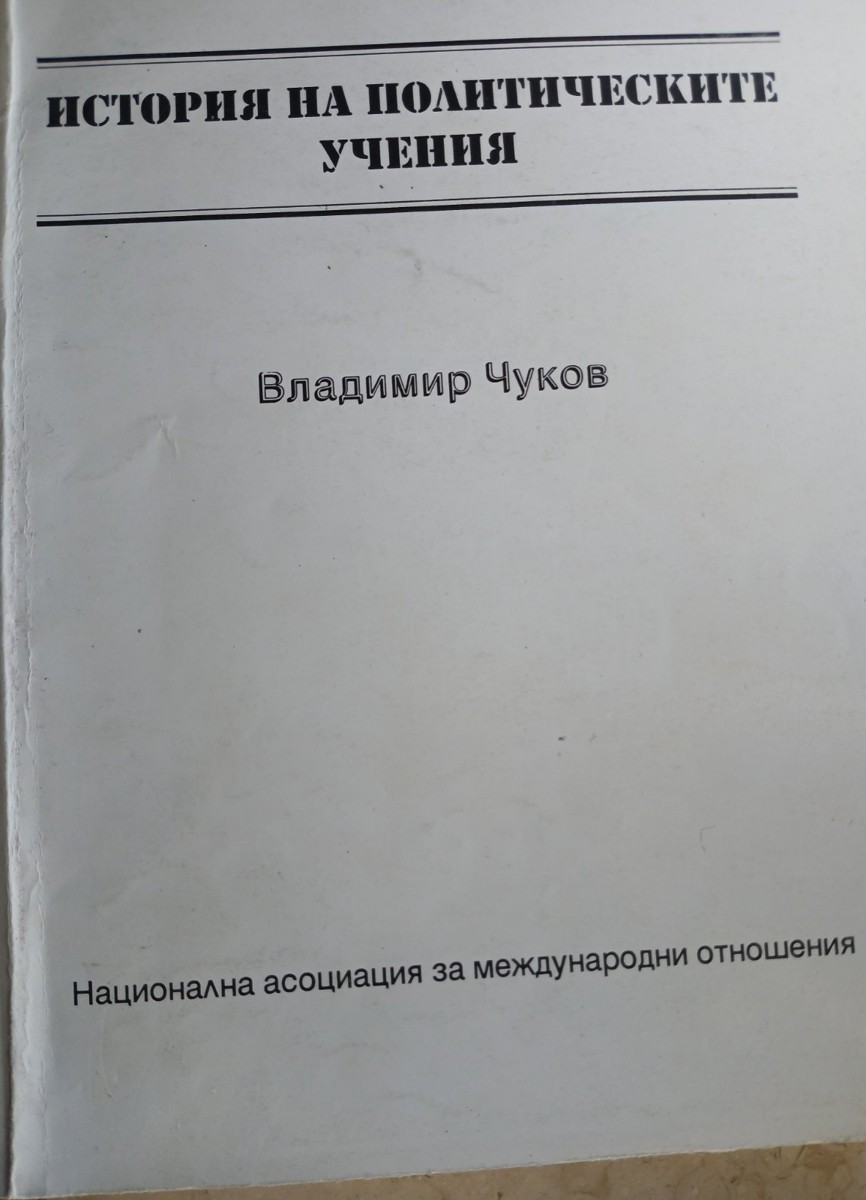
History of Political Doctrines
The monograph History of Political Doctrines is a comprehensive, systematic study of the origins, continuity, and transformations of world politico-legal thought from earliest antiquity to the end of the 20th century. The book examines political and legal ideas not as isolated theoretical constructs, but in close connection with the concrete historical eras, socio-economic processes, religious systems, and state institutions that give rise to them and upon which they, in turn, exert their influence.
The narrative begins with a theoretical and methodological foundation clarifying the subject, methods, and scholarly periodization of the history of politico-legal doctrines. Moving beyond the traditional Eurocentric approach, the study devotes special attention to the civilizations of the Ancient East. It traces the geographical, social, and religio-mythological factors that shaped the specific character of Eastern political thought in Ancient Sumer, Babylon, Egypt, India, and China, where authority and law were conceptualized within the framework of cosmic order and sacred tradition.
In the next section, the focus shifts to Antiquity, where political and legal thought separated from mythology and became rationalized for the first time. The classical doctrines of Ancient Greece and Ancient Rome—which laid the foundations for the concepts of the state, citizenship, justice, democracy, and natural law—are analysed in depth. The transition to the Middle Ages is traced through early Christian politico-legal thought, while medieval development itself is presented along two parallel and interacting civilizational lines: the rich Arab-Muslim politico-legal tradition and European Christian thought from patristics and scholasticism to the eve of the Reformation.
Substantial attention is given to the watershed era of the Renaissance, the Reformation, and the Early Modern period, when the modern conception of the state and sovereignty was born. The study traces the secularization of political theory in the works of Niccolò Machiavelli and Jean Bodin, alongside the ideological justification of classical absolutism. It also examines the political ideas of the Reformation and the subsequent evolution toward enlightened absolutism in the 18th century, highlighting its defining features and leading representatives.
A central place in the book is occupied by the era of the 17th- and 18th-century revolutions and the formation of modern constitutionalism. Detailed analysis is devoted to the philosophical and legal foundations of classical liberalism in the doctrine of John Locke, the aristocratic liberalism and theory of the separation of powers of Montesquieu, the concept of popular sovereignty of Jean-Jacques Rousseau and his followers, and the doctrine of national sovereignty of Emmanuel Sieyès. Political theory is directly linked to the historical practice of the English and Dutch Revolutions of the 17th century, as well as to the emergence of American politico-legal thought and American constitutionalism.
The concluding part of the work presents a panorama of the major ideological currents and legal doctrines of the 19th and 20th centuries. It traces the development and internal differentiation of the great political ideologies—liberalism, conservatism, and socialism—alongside the positivist views of Auguste Comte and his followers. Without shying away from the acute and controversial phenomena of the modern era, the study subjects racist, anarchist, and fascist political thought to critical analysis. The 20th-century overview is complemented by an examination of contemporary political processes and ideas in Third World countries, the emergence of green (ecological) political thought, and the leading schools of contemporary legal and political science.
With its clear structure, balanced civilizational approach, and rich theoretical synthesis, History of Political Doctrines serves both as a foundational academic course and as a comprehensive reference work on the evolution of ideas concerning power, law, and freedom in human history.
| Publisher | National Association for International Relations |
|---|---|
| Original language | Bulgarian |
Contents
Introduction
Chapter I. Introduction and Politico-Legal Thought of the Ancient East
- § 1. Subject, Method, and Periodization of World Politico-Legal Thought
- § 2. Factors Shaping the Specifics of Eastern Politico-Legal Thought
- § 3. Politico-Legal Thought in Ancient Sumer
- § 4. Politico-Legal Thought in Ancient Babylon
- § 5. Politico-Legal Thought in Ancient Egypt
- § 6. Politico-Legal Thought in Ancient India
- § 7. Politico-Legal Thought in Ancient China
Chapter II. Politico-Legal Thought of Antiquity
- § 8. Politico-Legal Thought in Ancient Greece
- § 9. Politico-Legal Thought in Ancient Rome
- § 10. Politico-Legal Thought of the Early Christians
Chapter III. Politico-Legal Thought of the Middle Ages
- § 11. Arab-Muslim Politico-Legal Thought
- § 12. Politico-Legal Thought during the Christian Middle Ages up to the Reformation (16th Century)
Chapter IV. The Renaissance, the Reformation, and the Age of Absolutism
- § 13. The Politico-Legal Thought of Niccolò Machiavelli and Jean Bodin
- § 14. Politico-Legal Thought in the Era of Classical Absolutism
- § 15. Politico-Legal Thought during the Reformation
- § 16. The Evolution of European Absolutism. The Enlightenment
- § 17. Characteristic Features of Enlightened Absolutism
- § 18. Representatives of Enlightened Absolutism
Chapter V. The Revolutions of the 17th–18th Centuries, Liberalism, and the Theory of Sovereignty
- § 19. The Birth of Liberalism – John Locke’s Doctrine of State and Law
- § 20. Aristocratic Liberalism – Montesquieu
- § 21. The Theory of Popular Sovereignty – Jean-Jacques Rousseau
- § 22. Followers of Jean-Jacques Rousseau
- § 23. The Theory of National Sovereignty – Emmanuel Sieyès
- § 24. Politico-Legal Thought during the English and Dutch Revolutions (17th Century)
- § 25. American Politico-Legal Thought. American Constitutionalism
Chapter VI. Major Politico-Legal Currents and Doctrines of the 19th and 20th Centuries
- § 26. Liberal Politico-Legal Thought
- § 27. Conservative Politico-Legal Thought
- § 28. Socialist Politico-Legal Thought
- § 29. The Positivist Politico-Legal Views of Auguste Comte and His Followers
- § 30. Racist Political Thought
- § 31. Anarchist Political Thought
- § 32. Fascist Political Thought
- § 33. Contemporary Political Thought in the Third World Countries
- § 34. Green (Ecological) Political Thought
- § 35. Contemporary Legal and Political Doctrines (19th and 20th Centuries)